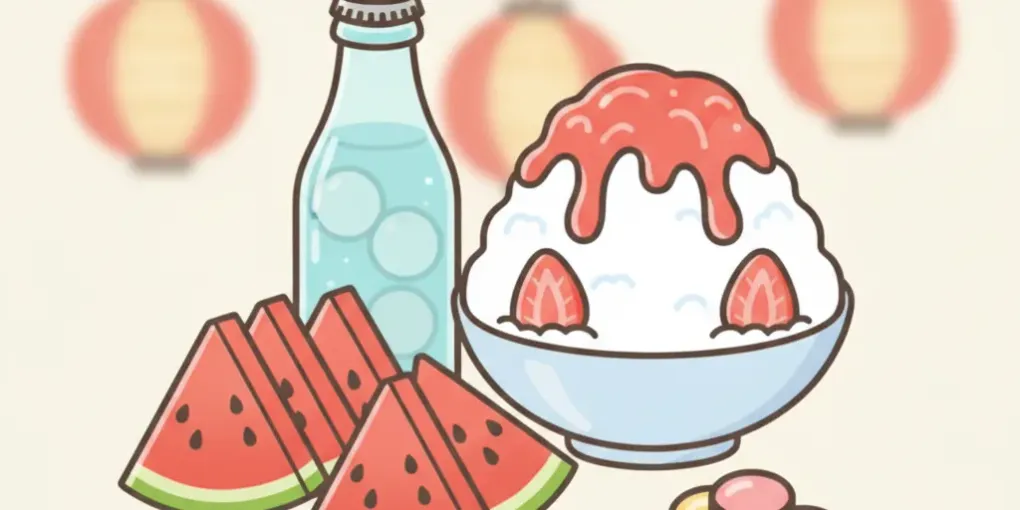
What Japan Snacks On in Summer: 6 Festival-Season Treats You Can Get in the US
August in Japan is brutal — 95°F, cicadas at full volume, air like a warm towel. Japan’s answer is a whole seasonal snack culture: matsuri (summer festival) stalls, marble-stoppered sodas, and sweets served cold on purpose.
Most of it ships. Here are the six summer staples you can order in the US, and the story behind each one.
1. Ramune — the marble soda
The sound of a Japanese summer festival is a glass marble dropping into a bottle. Ramune (marble-stoppered lemon-lime soda) has been sold at festival stalls since the 1880s, and the opening ritual is the point: press the plunger, the marble drops with a pop, and the soda fizzes up around it.
The taste is light lemon-lime — gentler than Sprite, less sweet. The marble rattles as you drink. Kids in Japan spend entire festivals trying to get it out. (You can’t. It’s sealed in. That’s the design.)
2. Morinaga Ramune candy
The soda’s candy cousin, and lately the more famous of the two. These pressed tablets dissolve into a cool, fizzy lemon-soda sensation — and they went viral in Japan as a work snack because the main ingredient is glucose. Office workers eat them as “brain fuel”; the internet followed.
The bottle-shaped package is a small design classic. One tube disappears in a sitting.
3. Calpico
Japan’s summer drink, full stop. Sold as Calpis in Japan (renamed Calpico in the US for obvious English reasons), it’s a chilled, lightly cultured milk drink — think yogurt’s refreshing cousin: milky, tangy, and somehow lighter than either juice or soda.
In Japan it’s the taste of summer break at grandma’s house — served over ice, condensation running down the glass. The US version comes ready to drink; the concentrate version lets you mix it the traditional way.
4. Mizu yōkan — chilled red-bean jelly
Summer’s official wagashi (traditional Japanese confection). Mizu yōkan is a soft, chilled jelly of red bean paste — smoother and much lighter than regular yōkan, with a clean sweetness and almost no heaviness. It’s the dessert Japanese department stores sell as summer gifts by the boxful.
Eat it cold from the fridge with green tea. It’s the least flashy item on this list and the one most likely to make you feel like you’re in a Kyoto tearoom.
5. Watermelon gummies
Watermelon owns Japanese summer — beach games are built around it (suika-wari: blindfolded watermelon smashing, seriously), and every candy maker bottles the flavor. Kasugai’s watermelon gummies are the classic: soft, juicy, and closer to actual watermelon than any American watermelon candy, which tends to taste like the idea of watermelon.
Some versions even include tiny chocolate “seeds.” Japan does not do flavor halfway.
6. Salt candy — shio ame
The most Japanese entry here: candy as heat-wave survival gear. Every summer, convenience stores stock shio ame (salt candy) next to the sports drinks — sweet hard candies with a measured hit of salt, eaten to replace what you sweat out. Lychee-salt is the beloved classic flavor.
Sweet-salty is having a moment in American food anyway; Japan has treated it as public-health policy for decades.
The ones that don’t ship (and what to do instead)
Summer shipping, the honest version
Want the summer-limited flavors Japan doesn’t export — the seasonal Kit Kats, the convenience-store exclusives? That’s exactly what monthly snack boxes are for. See how the big three compare in the Bokksu vs Sakuraco vs TokyoTreat showdown, or start with the year-round hits in 7 Japanese snacks Americans get hooked on.
The hero image is an original illustration, not a product photo.